





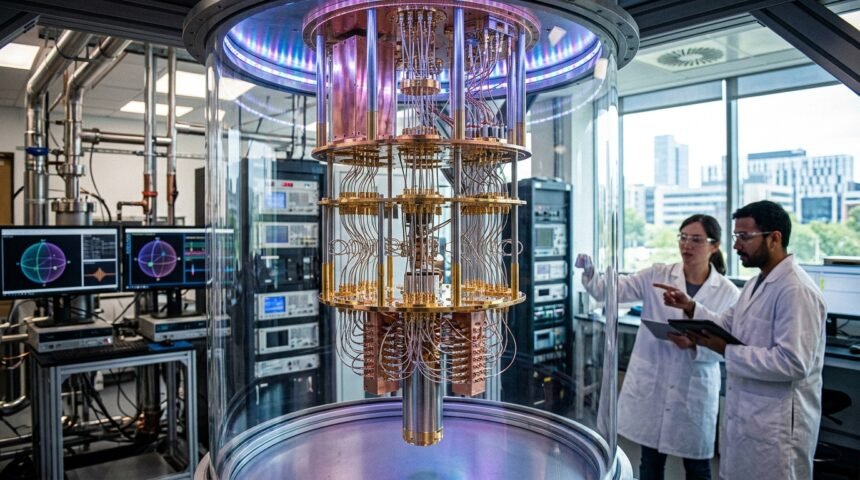
Quantum computing is rapidly becoming one of the most exciting trends in the technology industry. Unlike traditional computers that process information using binary bits, quantum computers use quantum bits, or qubits, to solve highly complex problems much faster. Although the technology is still developing, experts believe quantum computing has the potential to transform industries such as healthcare, finance, cybersecurity, logistics, and scientific research. As investments continue to increase, quantum computing is expected to play a major role in the future of digital innovation.
Understanding Quantum Computing
Quantum computing is based on the principles of quantum mechanics, allowing computers to process multiple possibilities simultaneously. This unique capability enables quantum systems to solve certain complex calculations much more efficiently than conventional computers.
While traditional computers remain suitable for everyday computing tasks, quantum computers are designed for specialized scientific and industrial applications.
Potential Applications Across Industries
Researchers and technology companies are exploring quantum computing for drug discovery, financial modeling, weather forecasting, artificial intelligence, and supply chain optimization. These applications require enormous computing power that traditional systems may struggle to provide.
As quantum hardware improves, more industries are expected to benefit from these advanced computational capabilities.
Impact On Cybersecurity
Quantum computing may significantly influence the future of cybersecurity. It has the potential to break some existing encryption methods while also encouraging the development of stronger quantum-resistant security standards.
Governments and technology companies are already investing in new cryptographic solutions to prepare for future quantum computing capabilities.
Challenges Facing Quantum Computing
Despite its promise, quantum computing still faces several technical challenges. Building stable quantum systems requires extremely controlled environments, advanced hardware, and significant research investment.
Developing practical quantum software and reducing computational errors remain important priorities before widespread commercial adoption becomes possible.
Global Investment And Innovation
Leading technology companies, universities, and research organizations continue investing billions of dollars in quantum computing research. Governments around the world are also supporting national quantum technology programs to encourage innovation and strengthen scientific leadership.
These investments are accelerating the development of next-generation computing technologies.
The Future Of Quantum Computing
Over the coming years, quantum computing is expected to complement traditional computing rather than replace it. Hybrid computing environments that combine classical and quantum systems will help organizations solve increasingly complex problems.
As research progresses, quantum computing is likely to become one of the defining technologies of the next digital era.
FAQs
What Is Quantum Computing
Quantum computing is an advanced computing technology that uses qubits to solve complex problems more efficiently than traditional computers.
How Is Quantum Computing Different From Traditional Computing
Traditional computers use binary bits, while quantum computers use qubits that can process multiple possibilities simultaneously.
Which Industries Will Benefit From Quantum Computing
Healthcare, finance, cybersecurity, logistics, manufacturing, scientific research, and Artificial Intelligence are expected to benefit significantly.
Is Quantum Computing Available Today
Quantum computing exists today mainly in research and specialized commercial environments, but widespread adoption is still developing.
Why Is Quantum Computing Considered A Major Tech Trend
It has the potential to solve complex scientific and industrial challenges that are difficult for conventional computers, making it one of the most promising technologies of the future.
Conclusion
Quantum computing represents a major shift in the future of technology by offering new possibilities for solving highly complex computational problems. Although the technology is still in its early stages, ongoing research and global investment continue to drive rapid progress. As industries prepare for the next generation of computing, quantum computing is expected to become one of the most influential technology trends in the years ahead.