





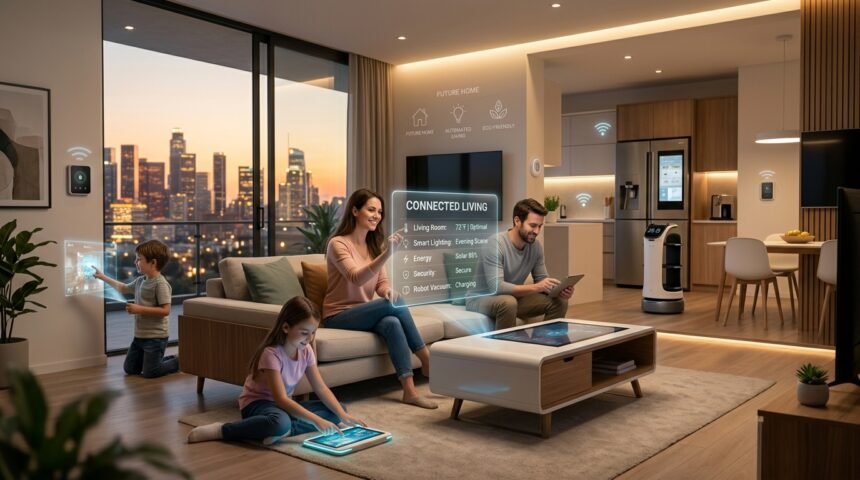
Smart home technology has become one of the fastest-growing trends in the technology industry. Modern homes are no longer limited to traditional appliances, as internet-connected devices now allow users to control lighting, security systems, entertainment, and household appliances remotely. Powered by Artificial Intelligence and the Internet of Things (IoT), smart homes offer greater convenience, improved security, and better energy efficiency. As technology continues to evolve, connected living is expected to become a standard feature in homes around the world.
What Is A Smart Home
A smart home uses connected devices that communicate through the internet to automate everyday household tasks. These devices include smart speakers, security cameras, thermostats, lighting systems, door locks, and home appliances.
Users can control these devices through mobile applications or voice assistants, making daily life more convenient and efficient.
Benefits Of Smart Home Technology
Smart home systems help improve comfort, security, and energy efficiency. Automated lighting and climate control reduce unnecessary electricity consumption, while smart security cameras and doorbells enhance home protection.
Remote access also allows homeowners to monitor and control their homes from anywhere using smartphones or tablets.
Artificial Intelligence In Smart Homes
Artificial Intelligence plays an important role in modern smart homes by learning user preferences and automating routine tasks. AI-powered assistants can adjust room temperatures, manage lighting schedules, play music, and provide reminders based on daily habits.
These intelligent systems continue improving through machine learning, making home automation more personalized over time.
Internet Of Things Makes Everything Connected
The Internet of Things connects multiple smart devices into a single network, allowing them to communicate and work together. For example, smart lighting can automatically turn off when security systems detect that nobody is home.
This level of connectivity creates a seamless user experience while improving convenience and reducing energy usage.
Security Challenges
Although smart homes provide many advantages, they also introduce cybersecurity risks. Weak passwords, outdated firmware, and unsecured networks can make connected devices vulnerable to cyberattacks.
Users should regularly update device software, use strong passwords, enable multi-factor authentication where available, and secure their home Wi-Fi network.
The Future Of Smart Living
The future of smart homes includes advanced Artificial Intelligence, better voice recognition, energy-efficient appliances, predictive automation, and deeper integration with renewable energy systems. Future homes will become even more intelligent by automatically adapting to user preferences while improving sustainability and security.
As connected technologies continue to advance, smart homes are expected to become more affordable and widely adopted.
FAQs
What Is A Smart Home
A smart home is a house equipped with internet-connected devices that automate and control various household functions.
How Does Artificial Intelligence Improve Smart Homes
AI learns user preferences and automates tasks such as lighting, temperature control, reminders, and home security.
What Is The Internet Of Things
The Internet of Things is a network of connected devices that communicate and share information through the internet.
Are Smart Homes Secure
Smart homes can be secure when users keep software updated, use strong passwords, and protect their Wi-Fi networks.
What Is The Future Of Smart Home Technology
Future smart homes will feature improved AI, stronger automation, better energy efficiency, enhanced security, and greater device integration.
Conclusion
Smart home technology is transforming the way people interact with their living spaces by combining Artificial Intelligence, IoT, and automation. These innovations improve convenience, increase security, and support energy-efficient lifestyles. As technology continues to advance, smart homes will play an increasingly important role in creating safer, more connected, and more intelligent living environments.