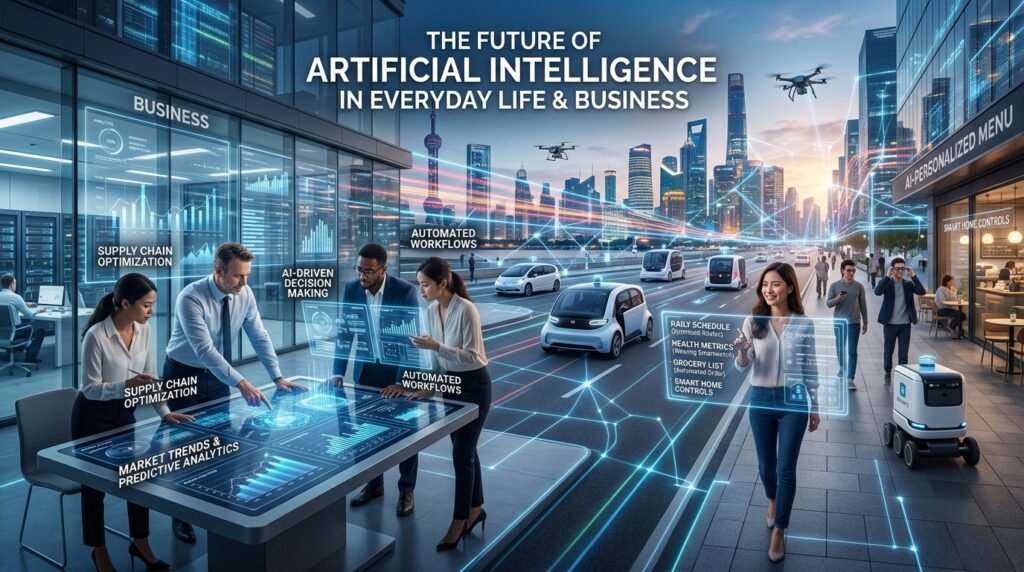
Artificial Intelligence is no longer just a futuristic concept; it has become a part of daily life and modern business operations. From smartphones and social media algorithms to automated customer support and advanced data analysis systems, AI is shaping how people live and how companies operate. As technology continues to evolve, Artificial Intelligence is expected to become even more deeply integrated into everyday activities, making processes faster, smarter, and more efficient across all industries.
Understanding the Growing Role of Artificial Intelligence
Artificial Intelligence refers to systems and machines that can perform tasks that typically require human intelligence, such as learning, reasoning, problem-solving, and decision-making. In recent years, AI has evolved rapidly due to advancements in computing power, data availability, and machine learning algorithms.
Today, AI is used in almost every major industry including healthcare, finance, education, transportation, and retail. It helps businesses analyze data, automate tasks, and improve decision-making processes. At the same time, individuals use AI-powered tools in daily life without even realizing it, such as voice assistants, recommendation systems, and navigation apps.
AI in Everyday Personal Life
Artificial Intelligence has become a silent but powerful assistant in everyday life. People use AI-driven technologies when they unlock their smartphones using face recognition, watch recommended videos on streaming platforms, or get personalized shopping suggestions online.
Smart home devices are another example of AI integration in daily routines. These devices can control lighting, temperature, and security systems based on user behavior and preferences. AI-powered virtual assistants also help users manage schedules, set reminders, and answer questions instantly, making life more convenient and efficient.
AI Transforming Business Operations
Businesses are increasingly relying on Artificial Intelligence to improve efficiency and productivity. AI systems can analyze large volumes of data, identify patterns, and provide insights that help organizations make better decisions.
Companies use AI for automating repetitive tasks, managing customer interactions, optimizing supply chains, and improving marketing strategies. This not only reduces operational costs but also allows employees to focus on more strategic and creative tasks that add greater value to the organization.
Personalized Experiences Through AI
One of the most significant impacts of AI is its ability to deliver personalized experiences. Businesses can analyze customer behavior and preferences to offer tailored recommendations, products, and services.
This level of personalization improves customer satisfaction and engagement. Whether it is online shopping, streaming services, or digital advertising, AI ensures that users receive content and offers that are relevant to their interests, increasing the likelihood of conversion and loyalty.
AI in Healthcare and Education
Artificial Intelligence is also revolutionizing critical sectors such as healthcare and education. In healthcare, AI helps doctors diagnose diseases more accurately, predict patient risks, and recommend treatment plans based on data analysis.
In education, AI-powered platforms provide personalized learning experiences for students. These systems can identify learning gaps, adapt content based on student performance, and offer real-time feedback. This makes education more effective and accessible to a wider audience.
The Role of Automation and Machine Learning
Automation and machine learning are key components of Artificial Intelligence. Machine learning allows systems to learn from data and improve their performance over time without explicit programming.
Businesses use these technologies to automate processes such as data entry, customer support, fraud detection, and financial analysis. As these systems become more advanced, they are expected to handle even more complex tasks, further increasing efficiency across industries.
Ethical Concerns and Challenges of AI
Despite its benefits, Artificial Intelligence also raises important ethical and social concerns. Issues such as data privacy, job displacement, and algorithmic bias must be carefully addressed to ensure responsible AI development.
Businesses and governments need to create regulations and guidelines to ensure that AI is used fairly and transparently. Building trust in AI systems is essential for its long-term success and acceptance in society.
The Future Potential of Artificial Intelligence
The future of AI is filled with possibilities. Emerging technologies such as generative AI, autonomous systems, and advanced robotics will continue to transform industries and daily life.
In the coming years, AI is expected to become even more intelligent and capable of handling complex decision-making tasks. Businesses that adopt AI early will have a significant advantage in terms of innovation, efficiency, and competitiveness in the global market.
FAQ’s
How is Artificial Intelligence used in daily life?
Artificial Intelligence is used in daily life through smartphones, virtual assistants, recommendation systems, navigation apps, and smart home devices that make everyday tasks easier and more efficient.
How does AI benefit businesses?
AI helps businesses improve efficiency, automate repetitive tasks, analyze data, enhance customer experiences, and make better strategic decisions.
Will AI replace human jobs?
AI may automate certain tasks, but it is more likely to change the nature of jobs rather than completely replace humans. Many roles will evolve to focus on creativity and decision-making.
Is AI safe to use?
AI is generally safe when developed and used responsibly. However, concerns such as data privacy and ethical use must be addressed through proper regulations and security measures.
What industries benefit the most from AI?
Industries such as healthcare, finance, retail, education, manufacturing, and technology benefit significantly from Artificial Intelligence applications.
Conclusion
Artificial Intelligence is rapidly transforming both personal life and business environments. Its ability to analyze data, automate processes, and deliver personalized experiences makes it one of the most powerful technologies of the modern era. While challenges such as ethics and privacy must be managed carefully, the potential benefits of AI far outweigh the risks. As AI continues to evolve, it will play an even greater role in shaping the future of industries, economies, and everyday life, making it a cornerstone of global digital transformation.