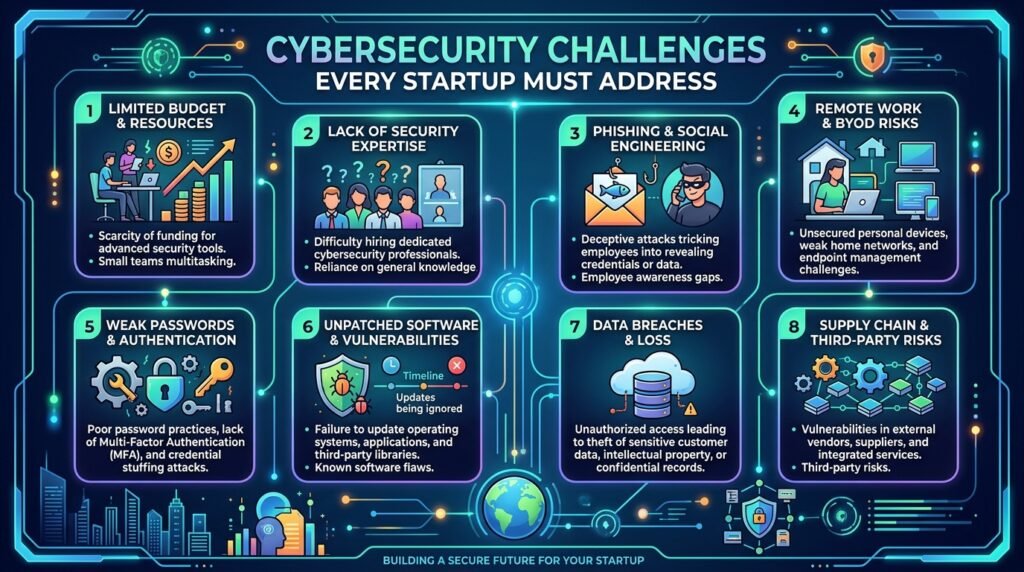
In today’s digital-first business environment, cybersecurity has become one of the most critical concerns for startups. As new companies increasingly rely on digital tools, cloud platforms, online transactions, and data-driven systems, they also become more exposed to cyber threats. Unlike large enterprises, startups often operate with limited budgets, small IT teams, and less mature security infrastructure, making them attractive targets for cybercriminals. Understanding cybersecurity challenges and implementing strong protective measures is essential for ensuring business continuity, protecting customer data, and building long-term trust.
Understanding Cybersecurity in Startups
Cybersecurity refers to the practice of protecting systems, networks, and data from digital attacks, unauthorized access, and damage. For startups, cybersecurity is not just a technical requirement but a core business necessity. Every digital interaction, from customer sign-ups to financial transactions, involves sensitive information that must be secured.
Startups typically adopt various digital tools such as cloud services, SaaS platforms, and mobile applications. While these tools improve efficiency and scalability, they also increase the number of potential entry points for cyber threats. This makes cybersecurity planning an essential part of early-stage business development rather than an afterthought.
Limited Security Resources and Budget Constraints
One of the biggest challenges startups face is limited financial and technical resources. Unlike large organizations, startups may not have dedicated cybersecurity teams or advanced security systems in place. This makes it difficult to implement comprehensive protection strategies from the beginning.
As a result, many startups rely on basic security measures, which may not be sufficient against modern cyber threats. Attackers often target these vulnerabilities because they know smaller businesses are less likely to have strong defenses. Investing in scalable and cost-effective security solutions is crucial for minimizing risks while managing budget limitations.
Data Breaches and Sensitive Information Risks
Startups collect and store various types of sensitive data, including customer information, payment details, and internal business records. A data breach can expose this information to unauthorized individuals, leading to financial losses and reputational damage.
The impact of a data breach can be especially severe for startups because they are still building customer trust. Even a single security incident can significantly affect brand reputation and customer confidence. Protecting data through encryption, secure storage systems, and access controls is essential for reducing these risks.
Phishing Attacks and Social Engineering
Phishing attacks are one of the most common cybersecurity threats faced by startups. These attacks often involve fraudulent emails, messages, or websites designed to trick employees into revealing sensitive information such as passwords or financial details.
Social engineering techniques rely on human error rather than technical vulnerabilities. Startups with limited cybersecurity training are particularly vulnerable to these attacks. Educating employees about recognizing suspicious activity and implementing verification processes can significantly reduce the risk of phishing incidents.
Weak Password Practices and Access Control Issues
Weak passwords and poor access management are common security challenges in early-stage businesses. Employees may use simple or reused passwords, making it easier for attackers to gain unauthorized access to systems.
Without proper access control policies, sensitive data may be accessible to individuals who do not require it for their roles. Implementing strong password policies, multi-factor authentication, and role-based access controls helps startups protect critical systems and reduce unauthorized access risks.
Cloud Security Vulnerabilities
Many startups rely heavily on cloud platforms for storage, communication, and application hosting. While cloud services offer scalability and convenience, they also introduce potential security risks if not properly configured.
Misconfigured cloud settings, unsecured APIs, and weak authentication practices can expose data to cyber threats. Startups must ensure that cloud environments are properly secured and regularly monitored. Working with reputable cloud providers and following best security practices is essential for maintaining data protection.
Ransomware and Malware Threats
Ransomware and malware attacks are increasingly targeting small businesses, including startups. Ransomware involves malicious software that encrypts data and demands payment for its release, while malware can disrupt systems or steal sensitive information.
Startups may face significant operational disruptions if they fall victim to such attacks. Regular data backups, updated antivirus software, and secure system configurations are important defenses against these threats. Prevention is always more cost-effective than recovery after an attack.
Lack of Cybersecurity Awareness
Human error remains one of the leading causes of cybersecurity incidents. In many startups, employees may not receive adequate training on cybersecurity best practices. This lack of awareness increases the likelihood of accidental data leaks, insecure file sharing, or falling victim to scams.
Building a culture of cybersecurity awareness is essential. Regular training sessions, clear security policies, and ongoing education help employees understand potential risks and take appropriate precautions. A well-informed team significantly reduces the likelihood of security breaches.
Compliance and Regulatory Challenges
As startups grow, they may need to comply with data protection regulations such as GDPR or other industry-specific standards. Compliance requires proper data handling, storage, and reporting practices, which can be challenging for young businesses.
Failure to meet regulatory requirements can result in legal penalties and loss of customer trust. Startups must ensure they understand applicable regulations and implement systems that support compliance from the beginning of their operations.
Securing Remote Work Environments
Remote and hybrid work models have become increasingly common, especially among startups. While these models offer flexibility, they also introduce new cybersecurity risks. Employees accessing company systems from personal devices or unsecured networks can create vulnerabilities.
Using secure VPNs, enforcing device security policies, and implementing endpoint protection solutions can help mitigate these risks. Startups must ensure that remote work environments are just as secure as in-office systems to protect sensitive data.
Building a Strong Cybersecurity Strategy
A strong cybersecurity strategy involves a combination of technology, processes, and employee awareness. Startups should prioritize risk assessment, identify potential vulnerabilities, and implement layered security measures to protect their systems.
Regular system updates, security monitoring, incident response planning, and employee training are all essential components of a comprehensive cybersecurity approach. By taking a proactive stance, startups can reduce risks and build a more resilient business foundation.
The Future of Cybersecurity for Startups
Cybersecurity threats are expected to become more advanced as technology continues to evolve. Artificial intelligence and automation will play both defensive and offensive roles in the cybersecurity landscape. Startups will need to stay informed about emerging threats and adopt adaptive security strategies.
Despite the challenges, new cybersecurity tools are becoming more accessible and affordable for small businesses. This allows startups to implement stronger protection systems without requiring large investments. The future will require continuous learning, adaptation, and proactive security management.
FAQ’s
Why is cybersecurity important for startups?
Cybersecurity is important because startups handle sensitive data and digital operations that must be protected from cyber threats, data breaches, and unauthorized access.
What are the most common cyber threats for startups?
Common threats include phishing attacks, ransomware, malware, weak passwords, data breaches, and cloud security misconfigurations.
How can startups improve cybersecurity?
Startups can improve cybersecurity by using strong passwords, enabling multi-factor authentication, training employees, securing cloud systems, and regularly updating software.
Are startups targeted by hackers?
Yes, startups are often targeted because they typically have weaker security systems compared to large organizations, making them easier targets for cybercriminals.
Can small startups afford cybersecurity solutions?
Yes, many affordable and scalable cybersecurity tools are available that are designed specifically for startups and small businesses.
Conclusion
Cybersecurity is a fundamental requirement for startups operating in today’s digital environment. As businesses increasingly depend on technology, protecting data, systems, and customer information becomes essential for survival and growth. While startups face challenges such as limited resources and evolving threats, adopting proactive security measures can significantly reduce risks. By building a strong cybersecurity strategy, educating employees, and investing in reliable tools, startups can protect their operations, build customer trust, and ensure long-term success in an increasingly complex digital world.